
Photo Courtesy of Bonnie Bosso
This past weekend, March 26-29, was the Theatre and Dance Department’s spring musical. This year’s show was Urinetown, a metatheatrical comedy about a society where one must pay to pee. I was the show’s Dance Captain, and I also played Josephine Strong, the mother of rebellion leader Bobby. This was my first show here at F&M, and, after the whole process, I am certain it won’t be my last. I am truly honored to have been a small part of such an amazing show, especially one that is so important.
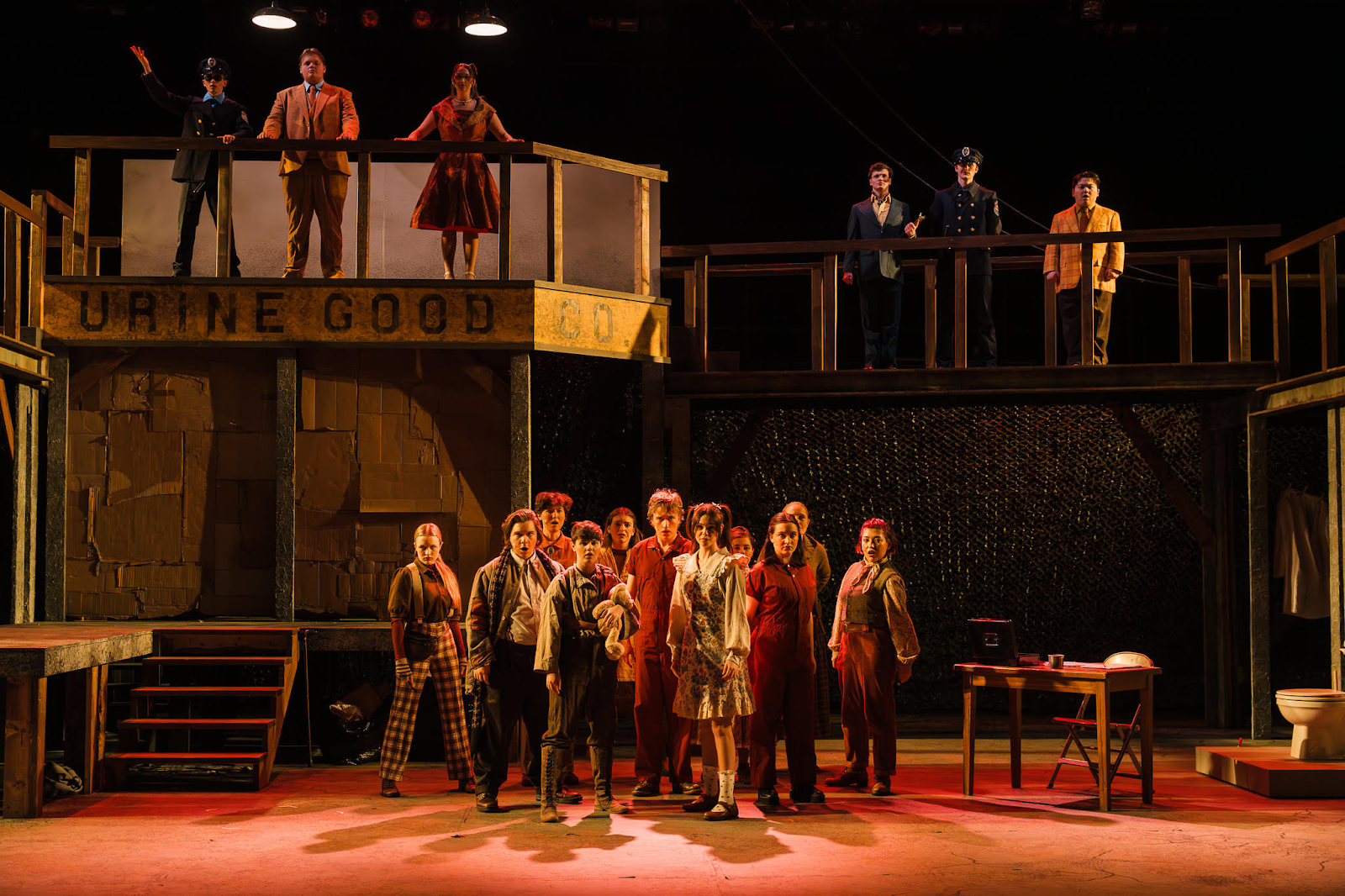
Admittedly, Urinetown can be a hard sell to audiences. The title alone is a bit jarring, and the general plot sounds off-putting to the average person. The thing that makes the show so exciting is its self-awareness. The musical knows it has a terrible title. It knows that there are holes in the plot. And it knows that you are watching. The musical uses verfremdungseffekt, Brecht’s “alienation technique,” to break the fourth wall, constantly reminding the audience that they are watching a stageplay. This method is used comedically in Urinetown, in order to remind the audience that the issues the characters face are the same issues that the audience faces. In our production, the curtains that would typically cover the backstage wings were left partially open, so audience members could see actors before they entered the stage. Actors who played background cops in “Cop Song” (myself included) donned police hats without removing their other costumes, reminding viewers that they are playing multiple parts. Officer Lockstock, portrayed by James Castor, ‘29, narrates through conversations with Little Sally (Gabby Cielo, ‘26) and with the audience itself. Castor’s comedic chops and character choices, which he attributes to the influence of his hometown friend Abhiraaj Nath, act as a vessel to deliver a greater message to the audience.
Urinetown isn’t just funny. It isn’t just a musical. It’s commentary, and it’s exceedingly relevant. At its core, Urinetown satirizes capitalism. Urine Good Company, run by Caldwell B. Cladwell (Frankie Halvey, ‘28), controls all of the public toilets in the area. The poor people who use these toilets obey the law blindly, fearing exile to the mysterious Urinetown. At this specific time in history, however, monopolizing corporations are not the only pressing matters addressed in the musical. Senior Meg Smith (Little Becky Two-Shoes) notes the show’s ties to the Lancaster community, where most establishments only allow paying customers to use the restroom. “Lancaster has a large homeless population who genuinely [need] to calculate where they can use the restroom… [T]hey cannot be caught by the police peeing in the street,” she says. “[I]t is likely that paying to pee may be a reality in the future if spaces like this become privatized.” Anna Barrett (Soupy Sue), ‘28, relates the drought in the show to current issues of a similar nature. She says, “We are actually facing a water crisis around the world for a multitude of reasons such as climate change, AI data centers, and oil/gas company pollution. While this show is silly, it touches on these issues quite explicitly.”
Theatre reminds us of the power in people, in numbers. It reminds us of what happens when a unified group brings their special talents together to create something moving. “Every production of a show is different from the next. Our production of Urinetown will never happen the same way ever again. Every individual brings something unique to a show,” says senior Emily Blackburn, who plays Penelope Pennywise in the show.
Director Rachel Anderson-Rabern creates a collaborative, uplifting environment that encourages experimentation and risk. Our music director, ‘25 alumni Morgan Moore, ties every individual voice together, uniting voices in sound and purpose. Choreographer Katelyn Petley, who I had the privilege of working alongside this semester, adds layers through movement. “Dance is a storytelling tactic,” she often reminds students. The lighting and set designers build the world, quite literally, where the story takes place. Stage Manager Devin Smitz, ‘26, makes sure that every part of the machine remains well-oiled. Although not every contributor is seen by the audience, the ones you cannot see deserve their flowers just as much as the ones you can.
“[W]ith TND you are held to a high standard of effort and professionalism because you’re working with professionals. That way you are pushed to be the best version of yourself,” says Jena Bernstein, ‘26 (Billy Boy Bill). “I’m truly honored to have been given the opportunity to work with professionals like that while still in the familiarity of an academic space.”
My time while working on this show has been nothing short of magical. The experience I have gained, the friends I have made, and the way audiences have reacted are things that will never leave me. Performing theatre might not be for everyone, but I believe it is so important to consume it. It only takes $5 out of your pocket and two hours out of your day. Let yourself be invested in a story that is unfolding in front of your eyes. Surround yourself with art, with people who are passionate about art. Reflect. Laugh. Because stories like Urinetown are so important, and they are ever the more important to experience live.
Freshman Sarah Henches is the Features Editor. Her email is shenches@fandm.edu.