
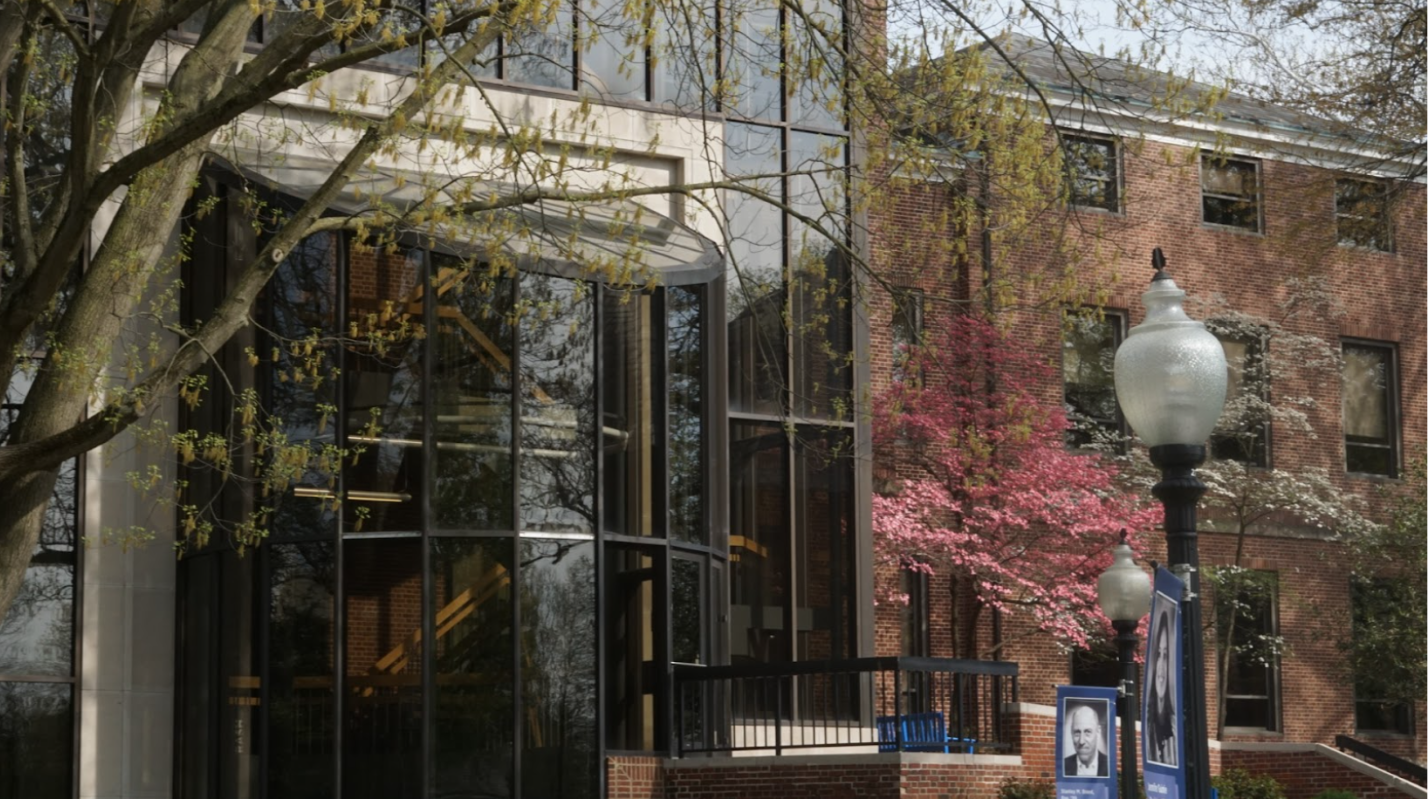
Students returning to campus this fall will find Stager Hall looking largely the same on the outside, but significantly upgraded behind the scenes! Last week, Assistant Vice President for Facilities Mike Wetzel announced at a Diplomatic Congress meeting that the college will undertake a $6.5 million renovation of the building over the summer, focusing on improvements to heating, air conditioning and lighting, as well as adding Americans with Disabilities Act (ADA)-compliant bathrooms.
The project, which is expected to begin immediately after Commencement, is expected to last twelve weeks. According to Wetzel, the renovation has been years in the making. Stager is one of the oldest and most heavily used academic buildings on campus. The building was constructed between 1900 and 1902 by renowned Lancaster architect C. Emlen Urban, with its red brick wings added in 1952, and was extensively remodeled between 1984 and 1985. Stager has hosted a range of departments over the years, and currently hosts classes for departments ranging from sociology to computer science. Its age and constant use has put strain on mechanical systems, with issues such as temperature inconsistencies prompting Facilities to undertake a renovation.
The bulk of F&M’s $6.5 million investment will go towards Stager’s heating, ventilation, and air conditioning (HVAC) system, which will resolve the recurring maintenance issues that the system has suffered. Lighting upgrades throughout the building will also improve the student experience.
Although the renovation will not dramatically alter the building’s appearance, one visible change will be the addition of ADA‑compliant bathrooms. While details have not been released, Wetzel noted additional bathrooms will be added to the building to address accessibility and gender distribution issues.
Beyond the current renovation, Wetzel and Facilities Director Perry Schneid commented that future priorities may include the Mayser Gymnasium and the Hackman Physical Science Laboratories. According to the Diplomatic Congress meeting minutes, Schneid highlighted that “Hackman had been on the books to renovate for the 20 years he had been there, and it was horrible to think [F&M] had labs from 1968.” However, Wetzel then cautioned that finding funds for renovation projects from donations was a challenge, noting that “there wasn’t a ‘wow’ factor for improving plumbing, cooling and so forth,” and as a result, F&M was only able to address “low-hanging fruit.”
Freshman Milind Gavankar is the News Editor. Their email is mgavankar@fandm.edu.